UbunTOS – Ubuntu 9.10 + TinyOS 2.x VirtualBox Image

This is my admittedly minor but I hope useful contribution to the TinyOS development community. TinyOS is an Operating System and development framework for Wireless Sensor Networks and other platforms which has a small footprint and is very energy conscious.

The TinyOS source code is available for free online for many operating systems, however it takes a long time to get the environment set up and it is not portable at all. I came across XubunTOS but it did not seem to be in active development anymore, so I endeavored to install TinyOS 2.1 and 2.x from source into a regular Ubuntu image. The most help came from Matt Keally’s Blog. While doing this, I thought it might be useful to many others who wish to develop in the TinyOS framework but might not have the skills necessary to install it. Therefore, I developed this VirtualBox image so that you can install it on any system for which VirtualBox is available and supports USB passthrough for the programming of the motes. I’ve tested on Windows 7, Windows XP and it should work on any other host OS, but I would love to hear your feedback. All funny business aside, I present to the world UbunTOS: Read More »

Share and Enjoy:
  • Twitter
  • del.icio.us
  • Digg
  • Mixx
  • Google Bookmarks
  • LinkedIn
  • Print
  • StumbleUpon

Essential FourSquare Anti-Stalking Security Tips

Currently I am in the Computer Science Master’s Program at West Chester University and I am focusing my research on Location Based Updates in Social Media and their societal and security implications. So you can say I think about this topic more than most normal people do.

FourSquare is a growing service that allows you to “Check in” to restaurants, grocery stores, museums and just about any place you can imagine. However, I have seen several of my friends checking in to locations which, I must say as a security research student, set off warning bells. Although I am calling out FourSquare specifically, these also apply to just about any other location based software where you broadcast your location to other folks, whether they are your friends or the general public. GoWalla and BrightKite are in the same boat.

As with any list, there are exceptions to the rule. So although I would say that you should generally avoid checking in at these locations and you can use it as a rough guide, things might be different for you personally.

Without further ado… here is my list of top FourSquare Check-in Locations To Avoid Read More »

Share and Enjoy:
  • Twitter
  • del.icio.us
  • Digg
  • Mixx
  • Google Bookmarks
  • LinkedIn
  • Print
  • StumbleUpon

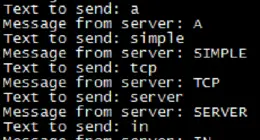
Linux Command Line, Generating a Random File

It is very easy to create a random file using the linux command line. Much like the command to fill a file with all zeros, for example a 1 Meg file:

dd if=/dev/zero of=zero.filename bs=1024 count=1000

You do the same using /dev/urandom:

dd if=/dev/urandom of=random.filename bs=1024 count=1000

Resulting in a 1MB file:

1000+0 records in
1000+0 records out
1024000 bytes (1.0 MB) copied, 0.0294247 s, 34.8 MB/s

This is transferring random data from the virtual device urandom to the output file. We use /dev/urandom instead of /dev/random because the /dev/random source generates random data very slowly. urandom is much faster at this but remains very random, if not quite a random as /dev/random. This should work with any system with dd and /dev/urandom.

Share and Enjoy:
  • Twitter
  • del.icio.us
  • Digg
  • Mixx
  • Google Bookmarks
  • LinkedIn
  • Print
  • StumbleUpon

What I recently learned about EDID, Windows 7 and nVidia

EDID stands for Extended display identification data and is what many computer monitors and televisions with a VGA/HDMI use to tell the PC what resolution they support. Which, in theory at least, is great.

However what I recently found out is that many LCD and Plasma televisions do not broadcast the correct 16:9 resolution via EDID, and therefore the computer doesn’t know what resolution to display and you have a stretched image. Read More »

Share and Enjoy:
  • Twitter
  • del.icio.us
  • Digg
  • Mixx
  • Google Bookmarks
  • LinkedIn
  • Print
  • StumbleUpon

Replacing the Cable Box – Boxee and Live HD TV with the Acer Revo 3610

Gone is my 500+ channel television subscription along with the required boxes necessary to decode all of that content. The DVR, which has been a mainstay of my family’s television viewing habits, has been ousted. In it’s place is a kick-ass system that keeps the DVR functionality for many of the TV shows that we usually watch, brings in much new content, and also saves me a few bucks each month.

Let’s face it, you don’t want all of the content that your cable provider offers. Cable providers have fought a-la-carte programming tooth and nail for this very reason. Much of it is specialty programming, and though I admit it is nice to know it was there, my family and I rarely watched any of it. My new setup brings many new sources as well as a CHOICE to what you want to view. I am very happy with the results so far. Read More »

Share and Enjoy:
  • Twitter
  • del.icio.us
  • Digg
  • Mixx
  • Google Bookmarks
  • LinkedIn
  • Print
  • StumbleUpon